
Oliver Wyman Forum recently published its 300,000 Voices… and what they tell us about the next era of global change report. It’s a meaty piece, filled with data-backed intel about our mindsets, behaviors, loyalties, workforce trends, leadership expectations, finances, demands for in-person interactions, etc., as humans navigating the post-COVID era.
While all sections of the report – What we value, How we feel, How we invest, How we work, How we embrace AI, How we lead – are deeply intertwined, we’re diving into the health and quality of life insights here.
What does the report say about health and quality of life?
Objective quality-of-life gauges and proactive health monitoring activities are at record highs, but people are feeling worse than ever. Self-reported mental health and physical health declined 11% and 8%, respectively, since 2022, even though commitment to long-term health and fitness has risen 20% in the same period.
“Frustrated with a health system that feels overstretched, consumers are arming themselves with AI, peer networks, and interventions that deliver visible results.”
The divide between high-income and low-income patients is widening:
- straining access to care for chronic illness among cohorts who need it most – not to mention more missed work, greater exposure to emergency care, and dwindling financial safety nets,
- transforming “hope” that one’s well-being will improve into “a luxury good,” more likely to be possessed by high earners,
- leading the most affluent to invest in customized preventive interventions, and
- causing those who find the system most confusing to turn to AI (rather than clinical experts) for answers at a rate 1.6x higher than others.
Upwards of 3 in 5 people perceive their health system is overstretched, and quality of care is declining. The U.S.-specific figures are likely even more bleak, mirroring the gap between lifespan and health span, which shows Americans are living longer but spending more of those years (12.4) feeling unwell.
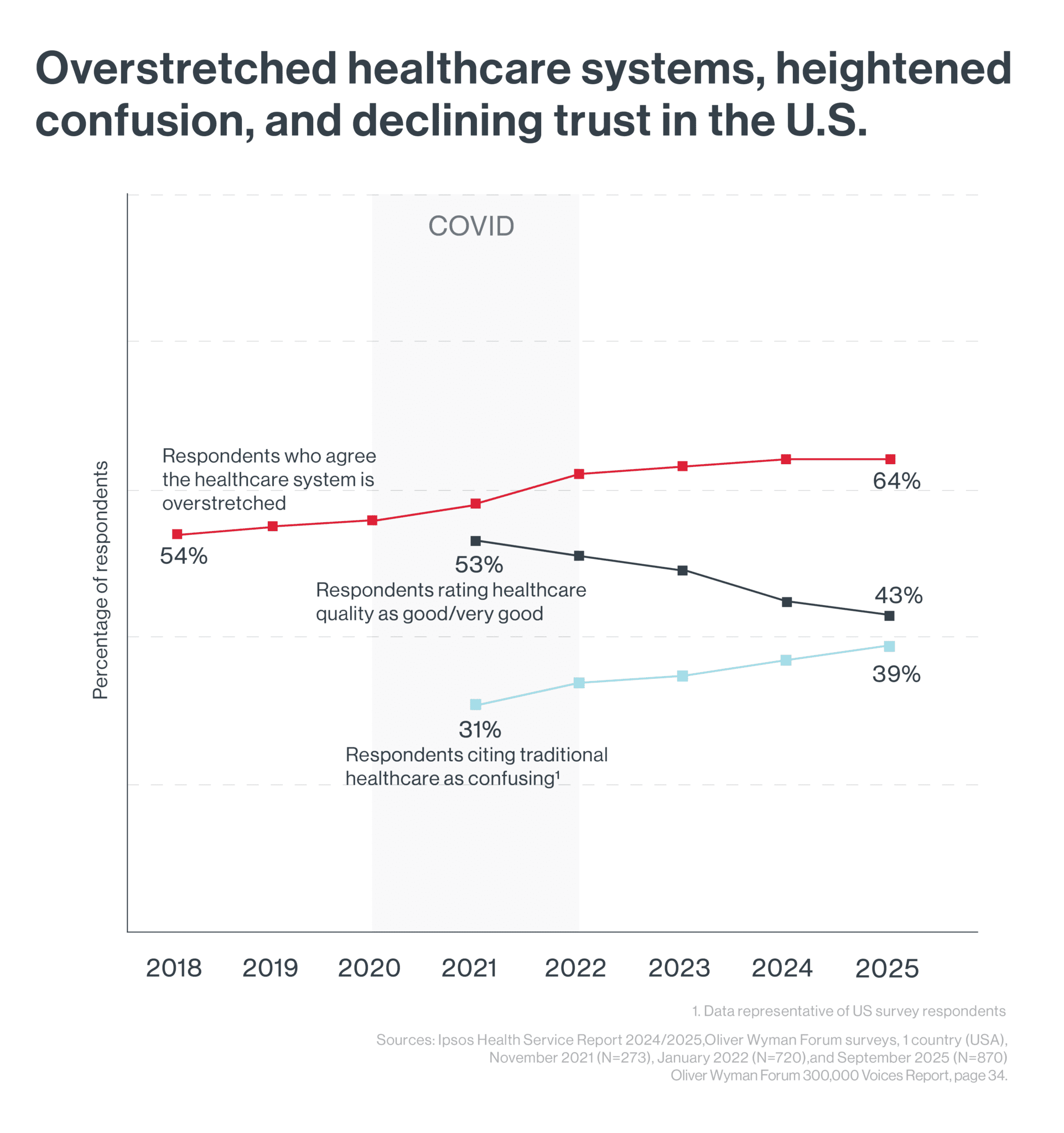
“Providers see the mismatch, and investment is starting to pivot toward infrastructure that delivers measurable outcomes, not just engagement.”
The proliferation of AI has also transformed consumers’ behavior in response. Sixty-five percent (65%) of people say they use AI in their healthcare journeys, and those who do are 2x more likely to use online symptom checkers and 36% less likely to interact with a primary care physician before going anywhere else. Meanwhile, the portion willing to trade health data for personalized insights is up 10 points (to 61%) since 2021.
What can all of us in healthcare do about it? our 2026 Healthcare C-Suite Trends Brief
Echoing what Carenet Health anticipated in our 2026 Healthcare C-Suite Trends Brief, leaders need partners to help them execute on strategies, translate engagement into action, and drive meaningful business results (like revenue growth, administrative efficiency, and medical cost reduction) and health outcomes.
Targeting the ‘average’ consumer is a fool’s errand; organizations are challenged to deliver programs that are highly personalized and outcomes-focused – which is leading them to invest more in infrastructure and systems for execution and community-building.
“This is not simply a matter of convenience. Years of staff shortages, long waits, and expectations shaped by on-demand digital services have reset expectations. Pandora’s medical bag is open. Healthcare systems now need to design for patients who are both proactive and deferential, often simultaneously.”
What resonates throughout all sections of the report?
Consumers are clamoring for trust, community and human connection, and “what they can actually control” – and the expectations are rising faster than any other data point. One’s financial reality and outlook is innately intertwined with their health, just as their work naturally drives their finances. And leadership in the marketplace and within each organization’s own walls looks different in this new era.
If you’re looking for a partner to help navigate ‘this new era’ and drive your business of healthcare forward, contact us.