
HLTH’s Beat Podcast — AI @ HLTH Series
A Conversation with Carenet Health
Carenet Chief Product Officer Dan Shur on friction in the healthcare system, care journey orchestration, and smart use of AI to drive outcomes with people.
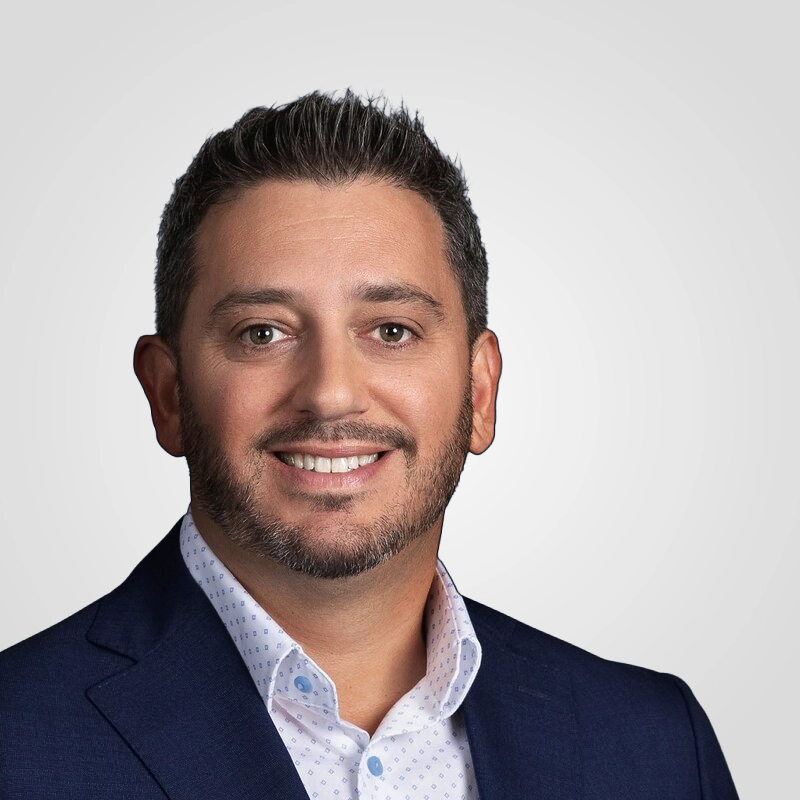
Dan Shur
AI & Navigation
01 What You’ll Hear
AI does the admin. The nurse does the human work.
Dan explains exactly where AI fits inside a clinical engagement model and where it cannot replace the registered nurse: empathy, unpacking complexity, and making the person feel seen.
02 Why It Matters Now
Fragmentation is accelerating. So is the cost of friction.
Healthcare complexity has exploded. Labor constraints are real. Value-based care demands earlier action. Dan describes how Carenet’s orchestration model was built for exactly this moment.
03 The Central Argument
Proactivity is the model. Education alone never was.
The industry spent billions educating patients and then sending them off. Dan argues the only approach that moves outcomes is doing it with people, not for them, and building solutions that enable self-sufficiency.
SANDY VANCE: You are listening to HLTH’s Beat podcast series on the use of artificial intelligence in healthcare. I’m your host, Sandy Vance, and whether you are a healthcare leader, a founder, or an investor, I invite you to join me weekly here on The Beat as we explore how AI tools are impacting healthcare. Buckle up. We’ve got a lot to learn from these industry forerunners who are using AI to change the face of healthcare.
Hey everybody, welcome back to the AI @ HLTH series on the Beat. I’m your host, Sandy Vance. And today I’m here with Dan Shur, who’s the chief product officer for Carenet Health. Welcome to the show Dan.
DAN SHUR: Thank you. I appreciate you having me here.
SANDY VANCE: Let’s start with your story. What brought you to Carenet?
DAN SHUR: I’ve always been a bit of a healthcare nerd. I’m fascinated by how people access care and the experience they have doing so. We have one of the most incredible advanced healthcare systems in the world, but the experience of using it is still incredibly complicated, even for someone like myself, who’s worked in the industry for more than thirty years. Every time I finally need something, I’m reminded firsthand just how complicated and hard it is to navigate.
My background spans payers, providers, and solution companies. I’ve been in operational roles, strategy roles, product roles. What drew me to Carenet was pretty clear: Carenet has the foundational operational backbone, the clinical depth, a modern debt free technical stack, and the scale to move the needle on outcomes. We want to impact experience, access, cost and clinical outcomes, not in theory, but in real world with real people.
So in sum, the timing was perfect. The industry is shifting from disconnected point solutions towards more of a true orchestration of resources. And I saw Carenet as a place that we could make that shift real for sure.
SANDY VANCE: Where did you come from?
DAN SHUR: I’ve always been in the space. Came from a care navigation company prior to this. And even before that, health plan world really focused on how you introduce people to the resources of that ecosystem and how to utilize services.
SANDY VANCE: So for our listeners who might not know, talk a little bit about the problem that Carenet solves for payers and providers.
DAN SHUR: Carenet partners with the country’s leading payers, providers and also health service companies to help them engage and guide and serve the members or patients more effectively. You can think about Carenet as operational and clinical engine that helps organizations deliver on their promises.
We run omnichannel engagement and member or patient support at scale. We bring seasoned clinicians, especially registered nurses, into the process where it matters most. We power high stakes interactions and nurse advice lines, triage benefits, guidance, transitions of care, scheduling, referrals, complex support scenarios. And yes, we can even lift entire call centers or operational desks and functions off the client’s plate. Which we do with tech-enabled precision, a selection of shoring options and healthcare expertise – not as a commodity BPO.
Navigation is something particularly important to me. It’s a huge part of what we do. It’s built on decades of operational excellence and a deep clinical background. Now augmented by technology. So our nurses and advocates make a fragmented system feel human again, more approachable. They help people understand what they need, what they’re eligible for, how to actually get it in real life, and all with humility and empathy.
SANDY VANCE: Is it that Carenet provides both the platform system and the people to run these services?
DAN SHUR: As a product nerd, we like to think about the world in terms of people, process, and tools. And so yes, at Carenet you can get the people, staff augmentation or expertise; you can get the processes to run those workflows; and you can get the platform to execute. People, process, and tools. Need all three.
SANDY VANCE: Why do you think navigation and the automation of navigation is so important right now?
DAN SHUR: Oh, so there [are] a few forces are hitting all at once. It’s sort of like a deluge. Complexity has exploded. Benefits, point solutions, network complexity, new care models, and ever increasing number of intermediary companies…
On top of that, the labor constraints are real. You have health plans and hospitals overwhelmed, and consumers are very frustrated. They expect convenience and compassion, yet they get a maze. Healthcare is the last industry where friction is still normal. It’s practically institutionalized. Value-based care is widespread. Demands earlier and more precise action these days. And then finally, AI has reached a point where it can meaningfully power prediction and workflow, not just generate insights – to summarize calls, can take actions on your behalf… So it’s all coming together.
“Health plans and hospitals are overwhelmed, and consumers are very frustrated. They expect convenience and compassion, yet they get a maze. Healthcare is the last industry where friction is still normal. It’s practically institutionalized.
“Think about [the healthcare esystem] like a spider web. When you pull one strand, the whole thing moves. It’s all interconnected and you have to understand that’s how people experience it.”
Dan Shur, Chief Product Officer, Carenet Health
SANDY VANCE: Yeah. I’d like to drill down into the complexity. So, you know, you talked a little bit about networks and care models and intermediaries. Like what does that landscape look like right now and how are you guys navigating that?
DAN SHUR: There [are a] lot of moving parts to the what I call the ecosystem, or the experience that a patient or member has. Right? I would offer the analogy. Think about it like a spider web. When you pull one strand, the whole thing moves. It’s all interconnected and you have to understand that’s how people experience it. And so when you put solutions or assistance in place, it has to be mindful of the entire ecosystem. It can’t just be myopically focused on its small piece of the puzzle.
When I think about the solutions that we’re moving towards, it’s really about looking at that fuller picture and orchestrating it. I’ll use that word a few times because I think that’s really important. I mean, individually, right? You think about it like the individual instruments all sound amazing on their own, but there’s something that’s magical that happens when you bring them all together into the orchestra. Somebody has to conduct that. Someone has to direct it to get the yield or the return that you’re expecting.
SANDY VANCE: Yeah. I mean, I think that’s probably the number one piece of feedback. We just came out of the ViVE event, which is HLTH’s sister conference, and there [are] a lot of CIOs from healthcare organizations. And this is probably the number one thing that they’re struggling with is there are so many amazing AI use cases and they’ve got to take advantage of those. But there are so many solutions out there. And of course, we’re all seeing with data being more interoperable, that you can use a best-of-breed system and you don’t have to be locked into just one solution. But I think that it’s a huge challenge for these CIOs to understand how to find the right technology partner, the right services partner, because there’s just so much at play, right? I mean, it’s just so complicated.
So what do you recommend when you when you’re talking to, you know, healthcare leaders, how would you call the balls and strikes when it comes to partnering with an organization like Carenet or finding other solutions or one organization that can do it all versus finding the best to do each little thing. What’s your take on that?
DAN SHUR: There [are] two layers to it, right? So there’s having the right technical partner that can build and train these models. But then there’s also that expertise. You need to understand the workflow that it’s augmenting or the workflow that it’s being a part of. And you do need those two pieces. I would say you get half the players out there in one piece and the other half know the other, but you really want to find a partner that understands workflows, understands healthcare, understands the needs and the pain points of members, patients, doctors, clinicians, and is bringing those together. That’s critically important. You know, I always say, if you’re going to automate something, you have to know how to do it manually first. You don’t know the baseline process. Then what are you doing, right? When it comes to like finding the partner, I kind of look at it and Carenet shares this philosophy: We apply these new technologies pragmatically only where they make sense, only where they drive impact.
Part of the challenge today for most of the CIOs, CEOs, all the other partners out there in the ecosystem is that everybody’s putting AI everywhere. Everybody’s super excited about it. But sometimes you just want a PDF to open because you want to read it. You don’t get to summarize, right? You don’t need it to do all these other things. Yeah. Sometimes you just want to know what the time is. Sometimes you just want to know what the weather is. You don’t need it to call your mother, okay? You don’t need, you know, if you do a blood pressure check and she checks in on you, like, because you’re going out.
SANDY VANCE: Yes, I love that, I love that. So what are the the biggest problems that organizations are coming to Carenet to solve?
DAN SHUR: It’s really about scale. It’s about making impact. It’s about how do we achieve the outcomes, not lose sight of the outcomes, right? Let’s move the friction and help people understand what they need, what resources are available to them and help them connect with those resources at scale.
When you think about Carenet, we have the nurses, we have the operations, we have the data and the technology. I would say we’re pragmatically applying that AI to kind of assist. We see that for health plans, they’re coming to us to help them reduce their clinical costs and to improve the outcomes. And a lot of that’s really around navigation and access. That’s where we really do great work.
They’re also coming to us to help them reduce their administrative expenses. And so with our scale and our business process outsourcing roots, we can bring a lot to the table there. And then that way, we really let the health plan focus on access and helping that population get the care it needs.
For providers is slightly different. It’s about acquiring patients. It’s about offloading that front door activity. The operational nuts and bolts off of their team’s plates. Their team is already overwhelmed. Their team are clinicians. And we want to let them focus on caring for the individuals they serve, taking care of their patients. And so we can do the administrative piece. We can also help them achieve a higher revenue and a value-based care model. There [are] a number of use cases, but this is just to give you a flavor of why they come to Carenet.
SANDY VANCE: I’ve heard you say, and actually, I’ve heard your team talk about helping humans be more human. And I’m just wondering if maybe you can help our audience out – share some specific examples of how you guys are leveraging AI and augmenting clinical or service teams, but it actually improves that human experience while lowering costs.
“I would say you get half the players out there in one piece and the other half know the other, but you really want to find a partner that understands workflows, understands healthcare, understands the needs and the pain points of members, patients, doctors, clinicians, and is bringing those together. ”
Dan Shur, Chief Product Officer, Carenet Health
DAN SHUR: I think one of the misbeliefs in the industry is that everybody wants to talk to the robot, right? Chatbots are not really good at empathy. They’re not really good at unpacking you and understanding what you need and just helping you feel seen or heard. That’s where you need the human always there.
And so we tend to look at the technology as a way to take some of the mundane administrative clerical work. The AI is really good at flagging clinical risk. It’s great prioritizing work [because] it can gather context and then furnish that to the nurse so the nurse isn’t starting from scratch. AI is great at anticipating needs. “Do you need me to call transportation? Do you need me to start a prior authorization? Do you need me to do X, Y, and Z?” These are things that we would rather have the humans not have to deal with. And then [have the human health advisors] just say yes. Fire. Yes. Okay. No, don’t need this. Right. And really let them focus on interacting with the person.
I think that and that we’re still kind of at a place where that needs to happen, especially since healthcare is so personal. It’s very unlike when you go and you’re buying a TV, [when] you’re not under stress, you’re not worried about your kids, right? You’re just excited to buy the biggest screen with the highest pixels.
Healthcare is very different. You’re emotionally driven. You’re concerned about your health. You’re concerned about a loved one’s health. You may have multiple things going on. You’re scared. So it’s not just a scientific transaction; it’s a whole person humanistic transaction.
And so getting back to AI and these new technologies, using the data, using the, you know, the automations, it all helps us kind of parse out. Let’s get the low stuff onto the machine. Let’s get the high impact stuff onto the human and have them work together in a multidisciplinary fashion. I know that’s a mouthful, but that’s sort of how we see it. I think that the outcome, what you’ll see is that people will listen more. I think people will take the advice more, use services more efficiently and ultimately improve their health. You know, meet their needs. And that’s what we’re here to do.
SANDY VANCE: Absolutely. So it’s great to, you know, to keep that patient or, you know, that end outcome in mind. But ultimately, you all are selling into payer and provider organizations. This technology is, you know, it’s, it’s a B2B thing. And you’ve got to get entire systems to implement this technology in order for it to work for the patients. And so I’m just wondering how your clients are measuring the impact and the results that they’re seeing. You know, patient outcomes obviously are really important to provider organizations. Is that something that is one of the metrics they’re using? Is it more about the return on the financial investment? You know, I think it’s all of it, but what are you guys seeing out there in terms of the metrics that they’re using to evaluate success?
DAN SHUR: I would say it boils down to three themes, right? Regardless of whether you’re a payer or provider or a healthcare services company, your empirical needs are to grow and to care for the population and thereby lower clinical expense, or to operate more efficiently at scale and thereby lower your administrative expense.
So for payers, they measure engagement. They want to know what percentage of the population we’re working with, what percentage of the population is falling through. After we interact with them, can we one-and-done in the population – meaning resolve your need right away, competently and efficiently upfront, so we don’t have to ping-pong you through a system.
They are [also] measuring retention. Do members like this health plan? Do they like the experience they have? Are they willing to sign up for this health plan again the following year? Also the customer satisfaction, the typical CAHPS scores… Things like this are things that the health plans are measuring. They’re measuring our ability to fulfill clinical indicators. Meaning gaps in care or do traditional preventive health care KPIs be able to close or document cases? So they’re measuring our ability to do that.
I could really speak for like a half hour straight on all the different KPIs, but I’m just going to talk about like the themes of what they’re measuring. And so all these clinical activities, and if you can attribute that you’re the one that got the member or the patient to do it. Okay, then you’ll get credit for it. So they want to be able to see that we project an ROI. We project a clinical, a good event, or an outcome. They want to show the association to the activity. You know, we need to demonstrate that we’re the ones that spoke to the member, and then the member went and got their flu shot. And then we’re the ones that spoke to the member, and the member didn’t go to the E.R.; they went to urgent care. So these are to give you a sense of the types of metrics that we are we track and that we hold ourselves accountable for, and that ultimately our clients hold us accountable for.
It’s very similar for the providers, but they are looking for patient acquisition. They are looking for us to acquire patients, schedule them, make sure that they show up prepared for their appointments. Because if these things don’t all happen, then they can’t bill for that patient. It becomes charity care. So that’s important for them.
They also want us to help them keep the patients within their system, prevent leakage. This is very big within the health systems, particularly, you know, because and then so it’s that follow up. And one of the things that we’re uniquely positioned is that we can offer a really robust way of engaging the patient after they’ve seen that doctor or after they’ve had that service. And we can do it at scale much more efficiently than, say, the doctor’s staff. Let them focus on the patient. We’ll do all the mundane follow up to the scheduling, the follow-on appointments, making sure that they understand their test results. And that way the doctors can keep on focusing on the patient care.
So hopefully that gives you a sense of some of the things that we’re held accountable for, but really it’s what drives our operations. It’s what drives the solutions that we put down in front of these clients, because the outcomes matter. And it’s about being pragmatic with it and really just not getting distracted on things that don’t matter.
SANDY VANCE: This is just such an interesting time, right? Like with AI exploding all over everything and it really is enabling so much. But at the same time, we’ve got to, you know, hamper that innovation with common sense at times. And so looking out over the next few years, I mean, there’s a lot of regulatory changes with patient cost transparency. It’s like our healthcare system is coming to a point where we need breaking change. So we’ve got to figure out what’s going to be the next thing. And I don’t think any of us have a crystal ball. But as you look at the next couple of years and how things are evolving, where do you think, at least in this world of navigation for care net, where do you think things are going to go ahead.
DAN SHUR: I’ll harp on the fragmentation of the system. I think it’s incredibly fragmented. And every year more layers keep inserting themselves. Back when I was a child, you went to the ER, you got one bill from the hospital. Now you go to the ER, you get a bill from the hospital, you get a bill from the doctors, you get a bill from the nurses, you get a bill from the pharmacist, you get a bill from the radiologist. You get a bill from the vending guy serving the Coke in the waiting room. It’s overwhelming.
And so I think that the solutions that can understand that that’s the reality because the economics are such that that’s not going to change anytime soon. Right. And so you have to help to kind of put Humpty Dumpty back together again,? And to make it work for you. But then the system also is putting a lot of constraints on you. You know, a lot of the newer health plans have narrow networks. They have restrictive requirements. And so you have to be able to navigate those constraints. You have to be aware of it. And so what you don’t want to do is continue going through the healthcare system as a patient or a member like that childhood game, Marco Polo. Marco – Polo – oh, dead-end; let me backtrack. Let me try this path. It’s not efficient. It’s not a good use of resources. It’s not a good use of time.
And let’s be honest, if your health is on the line, time matters. And so you need the smart journey through this. And I think that’s where you’re going to see is a need for it. Over the past, I would say three to five year, I hear it from the industry and I see solutions starting to emerge to do this. But you really do need that combination of people, process, and tools in order to pull it off.
SANDY VANCE: Talk to me about the Carenet advantage here.
DAN SHUR: This is why I’m excited to work with Carenet. First off, they have scale. They have operational know-how. They’ve been doing it for more than two decades. They understand how to interact with the population and get them to pay attention. They can do that. It’s not just robotically at scale. It’s to do it with that empathy, to make that human connection. Okay, so that way you can deliver your message and start a relationship where you’re working together.
I think number two, Carenet has the technical stack. I know that’s sort of like a nerd term, but a lot of companies are struggling with tech debt. They’re struggling with legacy systems, they’re struggling with end of life, you know, and all the amazing health plans out there have like thirty-year old mainframe systems, right? And they’re, they’re starting to come to a reality where like, there’s just nobody that knows COBOL anymore because all the guys that know how to program in COBOL computer language are like 75 years old. Um, you know, so some of them are in their fifties. Come on, let’s be fair. I don’t know anybody my age that knows how to program in COBOL.
SANDY VANCE: I do, I do my best friend was a COBOL developer and in finance. But she’s only 50. So but yeah, to your point though, things have evolved. It’s all changed. I mean, I was an interface analyst when we were using HL7 v2 messages and now it’s all FHR and JSON. So it’s things just totally change and you’ve got to be prepared for that, but you also have to be able to deal with those legacy systems, because you guys are walking into healthcare systems that do have all that technical debt. So, and do have, you know, lots and lots of different interfaces built with things. How are you managing that? I mean, it’s good that you’re, you know, you’re saying Carenet doesn’t have that technical debt and that this history, but you’re still facing it every single day, I’m certain.
DAN SHUR: And that’s the key understanding, right? We make sure that we’re not part of the problem, but then we talk about the pragmatic and practical application of these newer technologies. It’s for this. It’s the ability to interface with all sorts of data—it doesn’t matter how it’s stored, how it’s structured. And to transform that data and to homogenize it into something you can take action on, I think is where the magic happens. That’s where we’re putting our investments, you know? So now we have our own house cleaned up, now it’s about working with our partners.
And I’m not throwing shade on our partners, don’t get me wrong. Okay? It’s just a reality. That’s what’s out there, you know? Our job is to try to solve problems, make it easier to do what they want to do. And if they have an older tech stack, then we can work with that. That’s the point.
SANDY VANCE: If you had one piece of advice to offer to healthcare leaders that are embarking on this AI journey, what would it be?
DAN SHUR: I would say that healthcare is moving towards a world where proactivity is really critical. You have to be easy to do business with. It’s not optional. Consumers have a lot of choices, you know, and I think consumers are sort of. I’m using consumers, patients, and members, right? This sort of at a point where they’re just frustrated and jaded with the system. And so they choose to not engage. They choose to not get their testing done, take the preventative care, and they wait until it gets too late, which is the exact opposite of what we set out to do 30 years ago. And so obviously, you have to be proactive, you have to be precise with your information and your health, because the worst thing that can happen is when you show up to offer help and you just put more work on the consumer. So look for solutions that are willing to do that with the consumer, because I would argue that historically, we spent a lot of money (billions of dollars) creating programs to educate you and then send you off on your way. And then we wonder why you don’t do the tests or get the medications, or go see the specialist that you’re supposed to go see, you know? At some point, you have to listen to the consumer and they’re just, that’s not what they’re looking for. They’re looking for somebody to deal with them.
I think, over time, if you do it with them enough times, then they’ll start to pick it up and they may be more self-sufficient, but you have all different people. Some people are very self-sufficient and some people, doesn’t matter – you’re just going to have to do it with them. So solutions that are able to kind of operate on both ends of that spectrum are going to, I think, win the day.
You have to reduce that friction. Guide the people with clarity. Pay attention to the operations. And you have to also understand that, in the business of care, is a clinical component and there’s a non-clinical component. You can’t separate the two. You know, there’s me triaging you and figuring out what you need. That’s clinical. But then getting you an appointment is administrative. Well, the two go hand-in-hand, and so that’s important. You need comprehensive solutions that understand this. And then you will start to see a difference in outcomes.
SANDY VANCE: Fantastic. Dan Shur, Chief Product Officer of Carenet Health, thank you so much for your time today. I really appreciate it.
DAN SHUR: I appreciate you having me here. It’s been a great conversation. Thank you.
