
A Fortune 500, 15-state Medicaid and Medicare Advantage health plan serving nearly 5 million members was facing a convergence of pressures: rising behavioral health crisis demand, growing ED costs, and tightening state certification requirements. Carenet expanded its existing nurse triage partnership into a fully integrated, 24/7 specialty behavioral health crisis line. Within seven months, 96% of crisis callers were diverted from the ED.
01
Immediate crisis stabilization
24/7 crisis line integrating nurse triage and licensed behavioral health clinicians into one single entry point.
02
Clinical precision at scale
Licensed crisis specialists delivering rapid assessment, de-escalation, and coordinated care.
03
Measurable cost impact
Diverted 96% of crisis callers from the ED while maintaining high member satisfaction.
Behavioral health crisis demand was rising across the plan’s 15-state footprint. Members experiencing suicidal ideation, depression, anxiety, substance use concerns, interpersonal violence, urgent medication issues, and cognitive distress needed immediate intervention, without defaulting to emergency department care.
Four pressures converged at once:
Weeks.
The average wait time for a specialty behavioral health referral.
of callers in crisis were directed to the right level of care through clinician-led de-escalation.
Carenet expanded its existing nurse triage partnership with the plan into a fully integrated behavioral health crisis line.
Single point of entry
Members call one hotline.
02
Rapid identification and routing
A Carenet care coordinator quickly identifies need and routes the caller to either a Registered Nurse or Licensed Behavioral Health Clinician.
03
Licensed crisis intervention
Behavioral health clinicians conduct telephonic crisis assessment, coordinate emergency care if needed, de-escalate crisis situations, and connect members to long-term behavioral health resources.
04
Multidisciplinary collaboration
RNs, care coordinators, and licensed clinicians work in coordination to ensure each member receives the appropriate level of care intervention.
05
Best-in-class specialty partnership
Carenet partnered with ProtoCall (25+ years of crisis stabilization experience) to deliver certified telephonic crisis assessment and intervention services.
The design ensured resource efficiency, cost control, compliance, and consistent quality of care.
After seven months of partnership, the new approach to 24/7 behavioral health crisis support was delivering on its promise. Member satisfaction was high, quality of care remained consistent across the combined nurse triage and specialty solution, and effective resource management held. Top behavioral health concerns were anxiety, depression, and suicidal ideation.
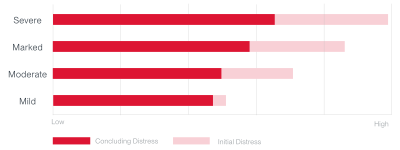
After seven months of partnership, the new approach to 24/7 behavioral health crisis support was delivering on its promise. Member satisfaction was high, quality of care remained consistent across the combined nurse triage and specialty solution, and effective resource management held.
Clinician-led de-escalation produced measurable distress reduction across all four severity levels. Concluding distress scores were lower than initial distress scores for every caller category. Top behavioral health concerns were anxiety, depression, and suicidal ideation.
One-Stop Behavioral Health Support Delivers 96% ED Diversion See how a Fortune 500 health plan redesigned crisis support and diverted 96% of callers from the ED in seven months.
The page gives you the outcome. The case study gives you the model: how the crisis workflow was designed, how ProtoCall’s 25 years of crisis stabilization experience was integrated, and how the plan went from an existing nurse triage partnership to a fully certified behavioral health crisis line in seven months.
